Friday, February 25, 2011

How to Be Creative

MacLeod has quite a few provocative things to say in his manifesto "How to Be Creative."  One of the most important ideas that he highlights is that of putting the hours in.

Ideas are wonderful and fun to come up with, but unless you follow them up with action, the ideas will remain ideas and progress will never be made.  This means that nothing changes, including you, your audience, or the world.  This is extremely important because without it, literally nothing happens.  You may feel good because you have good ideas, but it doesn't help anyone else, and the good feelings it brings you will soon be overwhelmed by your return to mediocrity.  Creativity is the foundation for good ideas, and hard work is the foundation for change that matters.
Another insightful point that he brings up is the idea that everyone is creative.  In his words, "Everyone is creative; everyone is given a box of crayons in kindergarten."  This idea means that the excuse "I'm just not creative" is not an excuse at all.  It is a waste of breath and it only means that you aren't willing to put enough effort in to make something worth creating.

Several years ago a study was done that was created to find the percentage of children capable of what is called divergent thinking (which many postulate is closely related to being creative).  The study showed that, in kindergarten, 98% of children were considered geniuses at divergent thinking.  This implies that we inherently have the ability to think differently and be creative.  However, the study was conducted repeatedly with the same children as they grew and were educated.  The study showed that the number of divergent thinkers decreased dramatically as they were taught how to think in school.  What does this mean for us?  It means we can be creative.  It may be buried deep down, but it's still there.  If you want badly enough to be creative, you can reconnect to it and do it.
The final point I want to highlight that MacLeod brings up is that creativity now makes businesses profitable and competitive.  This is something that resonates strongly with me.  To expand on that, I would argue that this points to the uprising of smaller, more versatile companies within the marketplace.  Because many (not all) large corporations are so steeped in bureaucracy and rules, they will be at a huge disadvantage when trying to compete with creative powerhouses.  The large corporations that have existed and been successful in the last century are created on foundations that are nearly the opposite of the foundations necessary to foster creativity, and the major adjustments that they would need in order to embrace creativity set up an up-hill battle.  
This means that smaller companies will have a much easier time building an atmosphere of creativity that will grant them success in the marketplace.  Most larger companies will have no choice but to shift, however, because otherwise they will lose profitability because of their antiquated traditions and business models (like most big print newspapers).  
Without creativity, businesses are doomed.  But, embracing the chaos of the creative process and pioneering a new trail is far more effective and profitable in the current economy, and in that lies the key to standing out and making a difference.

Movie Commentary


This is an excellent closing scene to a well-made movie.  It starts with an extreme wide shot to establish the airport as the setting.  This shot uses deep space to make the viewer feel empty because Andrew is leaving and returning to his empty life in California.  A steady rhythm is set because of the consistent vertical and horizontal lines.   Here, the two main characters move left across the screen, showing Andrew moving away from his home.
The next shot starts as a wide shot and zooms into the two of them talking as the moment becomes more emotional.  This is set against stairs which create flat space with a constant horizontal rhythm so that the audience will focus on the two characters without any distractions.  Up until the final few scenes in the movie, Andrew has been wearing black, white, and gray to illustrate his lack of emotion.  Finally, at the end of the movie he begins to wear bright colors to show his returning emotion.  Additionally, in the final scene he wears red to show that he is in love with Sam who is wearing white because he sees her as being innocent. After they talk, Andrew moves up the stairs, which is understood to be the same direction as in the first shot, showing him moving away.
In the scene, Andrew's head is rounded by his hair style to show that he is gentle and caring, and Sam is a triangle head (with her hair down) to show that she is weaker emotionally.
As the conversation gets more intense, the camera changes from a medium shot to switching between close-ups of each character.  In each of these close-ups the lines in the frames all point toward the character we are supposed to be watching.  This is done with the stairs for Sam, and with the movement of the escalator that moves towards Andrew's head.  While the shots switch back and forth, the connection between the two characters is still apparent because of the virtual lines created by each person's line of sight.
After Andrew ascends the escalator, the next shot utilizes very flat space because of a blurring effect that focuses the viewer on Andrew and his emotions.  It also sends a message that shows him returning to his apathetic state of mind as he moves back toward his old life.
The next series of shots show each main character returning back to what their lives were like before Andrew was a part of them.  This montage of medium shots illustrates how each character is alone with Andrew gone.  Their movements are slow because without Andrew their lives are dull and boring.
After this, when Andrew is shown on the plane, he is in the center of the shot, framed by fast moving people on all sides while he is still.  This continues to reinforce the idea that he is returning to a life that does not suit him and leaves him alone and without meaning.
Next, Sam is shown in a telephone booth that frames her within a rectangle and visibly shows separation because of the closed doors.  Then, Andrew returns and opens the doors and reunites with her in the ending scene.

Tuesday, February 8, 2011

Framing the Picture


The original picture by Goossens (left) has a gloomy ambiance, reinforced by the colors and the composition.  The rhythm is very distinct: one large beat formed by the house, followed by a small beat created by the man in the foreground.  These two main beats are punctuated by the tiny beats of the cityscape in the background.  This rhythm creates a subtext that makes the man look weaker because he is dwarfed by the floating mansion and he comes after it when the viewer looks from left to right.  He is also grounded, while both the hawk and the house are in the air, perhaps suggesting a limitation of sorts.  The
The reframed picture (right) has a completely different rhythm.  In the foreground, the hawk and the man create a smaller and then a larger beat, and the cityscape is larger in scale, giving each building more weight in the overall rhythm.  The man looks significantly more powerful because he is the largest part of the composition in this frame.  Now he towers over the city and seems to be approaching it with determination instead of fleeing toward it.  Because he is the largest thing in the foreground, the man’s line of sight toward the city communicates power and determination instead of fear and shame as in the original.  The darkest parts of the sky are cropped out also, which gives the picture a brighter feel.   Removing the house also changes the space in the picture from feeling very deep to feeling more flat because it acted as a contrast to the buildings in the distance, indicating their relative distance.  Without that reference, the buildings look closer and the space seems smaller and more flat (not completely flat).
I chose to reframe the picture this way to give more emphasis to the man and to make him seem more mysterious instead of insignificant.  I think Goossens framed the original the way he did in order to portray the journey of the man that is bigger than him.  Placing him between a large house and a distant cityscape that are connected by long vertical lines on the ground gives this feeling.  The gloom in the sky also makes the journey seem difficult and monotonous, whereas it seems less so in the reframed version because the darker parts of the sky are out of the frame.  It's amazing how many different compositions can be taken from the same image.

Wednesday, February 2, 2011

Monday, January 31, 2011

Laying the Foundations for Creativity

Seth Godin's manifesto on changing yourself is full of insight on how we can reinvent ourselves.  He posits that because we have the resources and the opportunity (via the internet) to make connections and change things, then all we need is the will to do it, and we can completely reinvent ourselves.  This requires quite a bit of effort, but it is worth every ounce because it is the only thing that matters.  We are trained in school (not educated) to follow orders, to be complacent.  Complacency used to work, but now it is dangerous.  If we choose to reject that and reinvent ourselves, then we have a chance at making a difference.

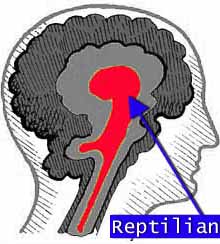
The first and biggest obstacle we face in recreating ourselves is our own survival instinct.  Where it was once helpful, it now restricts us from doing things that matter.  Steven Pressfield calls this the resistance and Godin calls it the lizard brain.

Either way, it is the part of our brain that is scared and causes us to be scared about taking risks.  Risk management is its MO.  Anything that could potentially backfire triggers the lizard brain and causes us to think twice about taking that action.  The most important thing we can do in regards to this resistance is to stare it in the eye and then to walk past it and ignore its pleas for mercy as we go on to do exactly what it tells us not to.  This is how we begin to make progress and make a difference.

Another obstacle is learning.  Not becoming "educated."  Learning something useful.  Education was designed for a factory model of production used in the Industrial Revolution.  This model worked for what was necessary and useful in that time period, but it is counter-intuitive to what we need now, and so it is broken.

You no longer learn what you need to know in school.  You learn when you surf the web and read about what the world is doing.  You learn when you work through communication challenges with a team at work.  You learn when you have to balance things in your life every day, when you choose what to do and what not to do.  Public institutions of knowledge can no longer be relied upon to give us everything we need to function in society, let alone make a lasting impact.  We learn a few useful things in school, but now the responsibilities lies on your shoulders to figure out what you need to know and learn about it.  And this is the first step to rejecting and ignoring the resistance that wants us to be safe and to keep quiet.

Seth Godin often talks about doing real work, doing something important.  Assignments like this one are part of that real work that needs to be done.  If we blow them off, they are useless (as with most things).  However, if we put in the effort to make them worth our time, they give us a valuable opportunity to step back, analyze ourselves, and actually learn.  In addition to that important learning, we also have the opportunity to put together a portfolio chronicling our thoughts and opinions as we develop our creative identities.  The creation of that identity is the foundation upon which we will build careers and our lives. Whether we take advantage of these opportunities or not will be an indicator of how we will develop as professionals and as people.  These assignments are the beginning of a long path that Seth Godin describes as necessary to reinvent ourselves.

Pictures from:
Lizard Brain - http://www.crystalinks.com/brainreptoid.jpg
Cartoon: http://interacc.typepad.com/.a/6a01053596fb28970c0133f28c7108970b-400wi